
- Ferrite Magnet Grade Performance Table
- Alnico Magnet Grade Performance Table
- SmCo Magnet Performance Chart
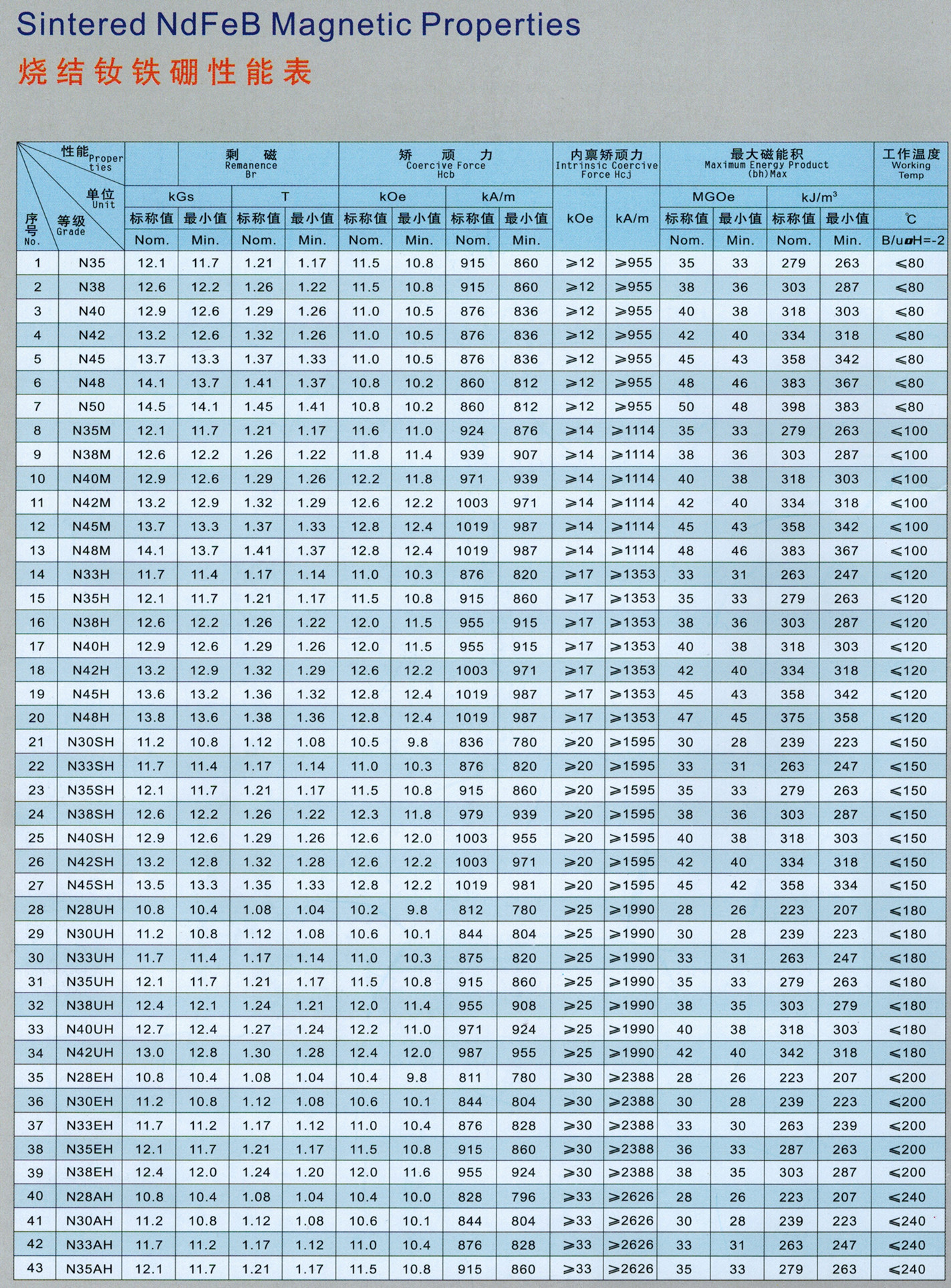
- NdFeB Magnet Performance Chart
- 为什么要对钕铁硼磁铁进行圆角操作?
联系人:邓先生
手机:187 5656 8877
电话:4008 238 338
邮箱:admin@admin.com
地址:厦门市思明区吕岭路258-802
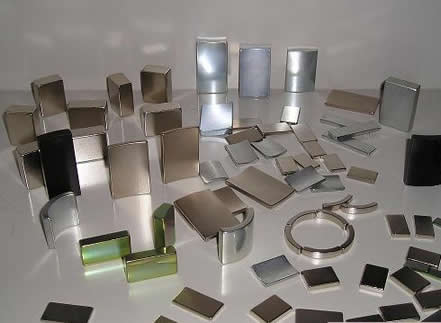
In 1983, Masato Sagawa (M. Sagawa) from Sumitomo Metals in Japan first developed sintered NdFeB permanent magnet materials using the powder metallurgy process.
关注热度: ℃
发布时间:2026-07-02 13:38
In 1983, Masato Sagawa (M. Sagawa) from Sumitomo Metals in Japan first developed sintered NdFeB permanent magnet materials using the powder metallurgy process. Almost simultaneously, J. J. Croat from the General Motors Rapid Solidification Magnet Division produced bonded NdFeB magnets via the rapid quenching method. Both companies applied for independent patents for their respective technologies.
As a result, there are two dominant types of NdFeB magnets worldwide: sintered NdFeB magnets produced by powder metallurgy and bonded NdFeB magnets manufactured by rapid quenching. Other less common production methods include the reduction-diffusion process, HDDR process and casting process. All of our NdFeB products are sintered permanent magnets manufactured with optimized powder metallurgy technology.
Sintered NdFeB is an alloy magnet composed of neodymium, iron, boron and trace elements such as Dy, Al, Nb, Mo and Co, with a density of 7.5 g/cm³. The manufacturing process adopts powder metallurgy: the smelted alloy ingots are pulverized into fine powder, oriented and pressed under a magnetic field, then sintered under vacuum or inert gas to achieve high density and compactness.
Thanks to this mature process, sintered NdFeB possesses extremely high magnetic energy product and coercivity, excellent cost performance and good mechanical properties, earning it the reputation of “King of Modern Magnets”.
Advantages Compared with Other Permanent Magnet Materials
Sintered NdFeB features outstanding magnetic performance with high remanence (Br), high coercivity (Hcb, Hcj) and maximum magnetic energy product (BH)max. Due to its superior magnetic properties, it has been widely applied in almost all industrial fields since its invention.
Disadvantages
NdFeB magnets also have inherent limitations: brittle texture, maximum operating temperature below 220℃, relatively poor temperature stability and weak natural corrosion resistance.
Surface Coating & Protection
Due to poor inherent anti-corrosion performance of NdFeB materials, surface coating protection is essential for practical application. According to different environmental and anti-rust requirements, we provide a full range of surface treatments: zinc plating, nickel plating, epoxy resin coating, electroless plating, gold plating, silver plating, aluminum plating, chromium plating and Parylene coating.
- 上一篇:暂无
- 下一篇:Disc Sintered NdFeB Magnets

 客服
客服